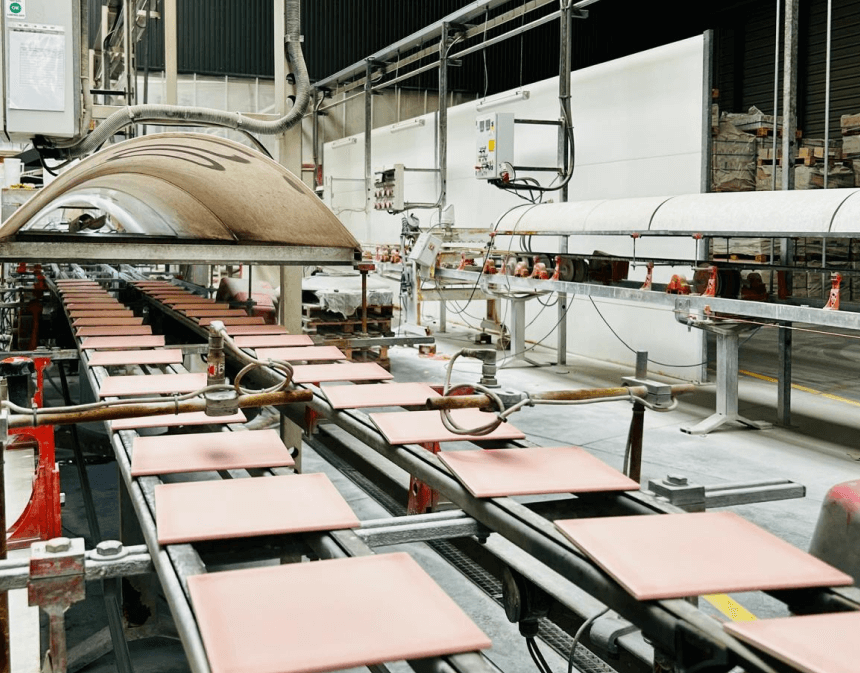
A ceramics kiln never sleeps. Day and night, it needs heat, and for as long as anyone in the industry can remember, that heat has come from burning methane. Replacing it has always run into the same wall: very few clean technologies can reach the temperatures a furnace demands. That wall is now coming down.
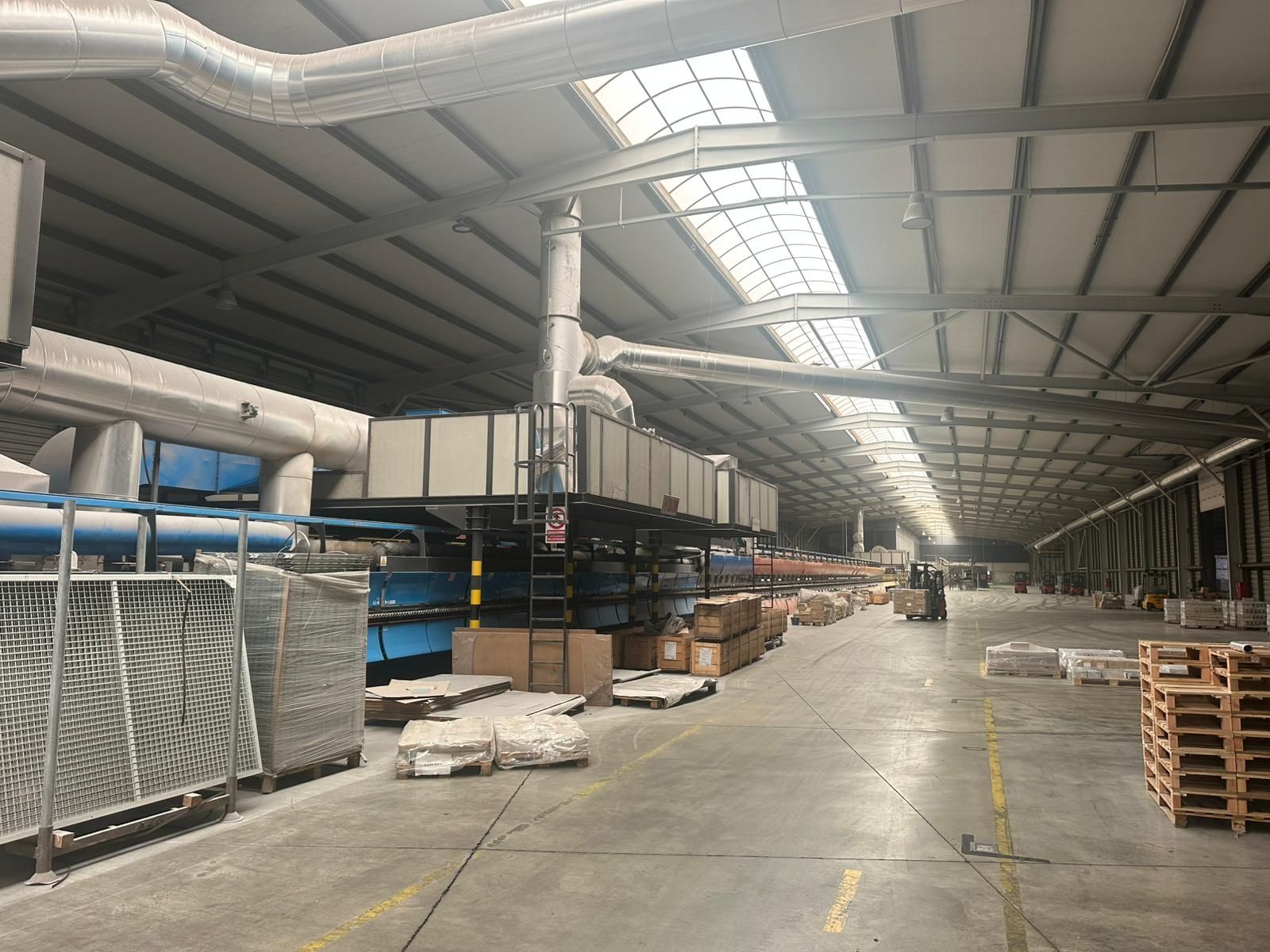
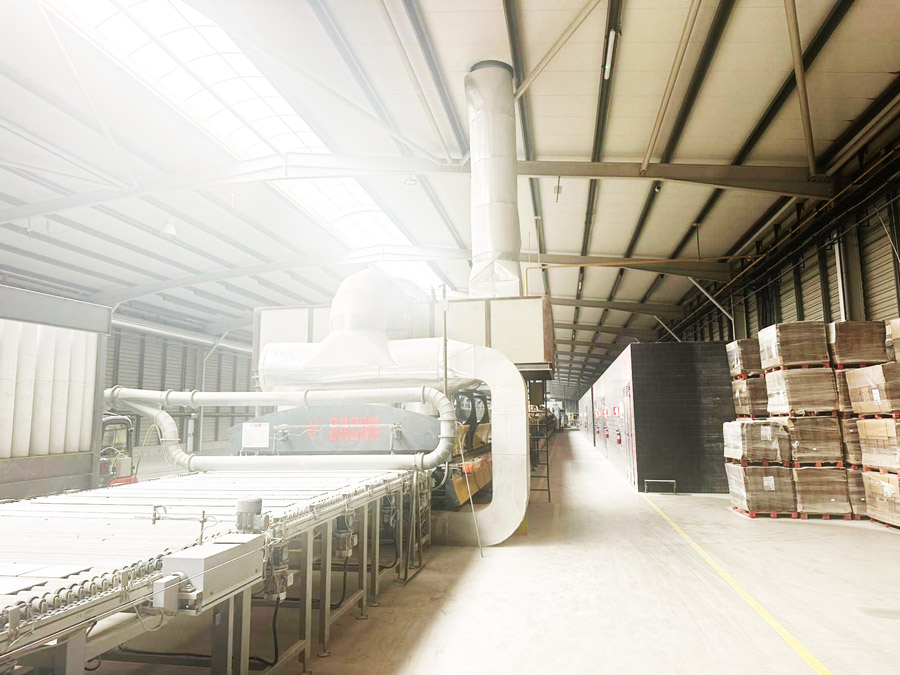
Last week, our Co-founder and BDO Haslen Back visited a ceramics manufacturer near Aveiro to look at how the EnergiCell® integrates into their furnaces and production line. It is a working site, firing continuously, and exactly the kind of hard industrial process the EnergiCell was built to serve.
Where the EnergiCell earns its place
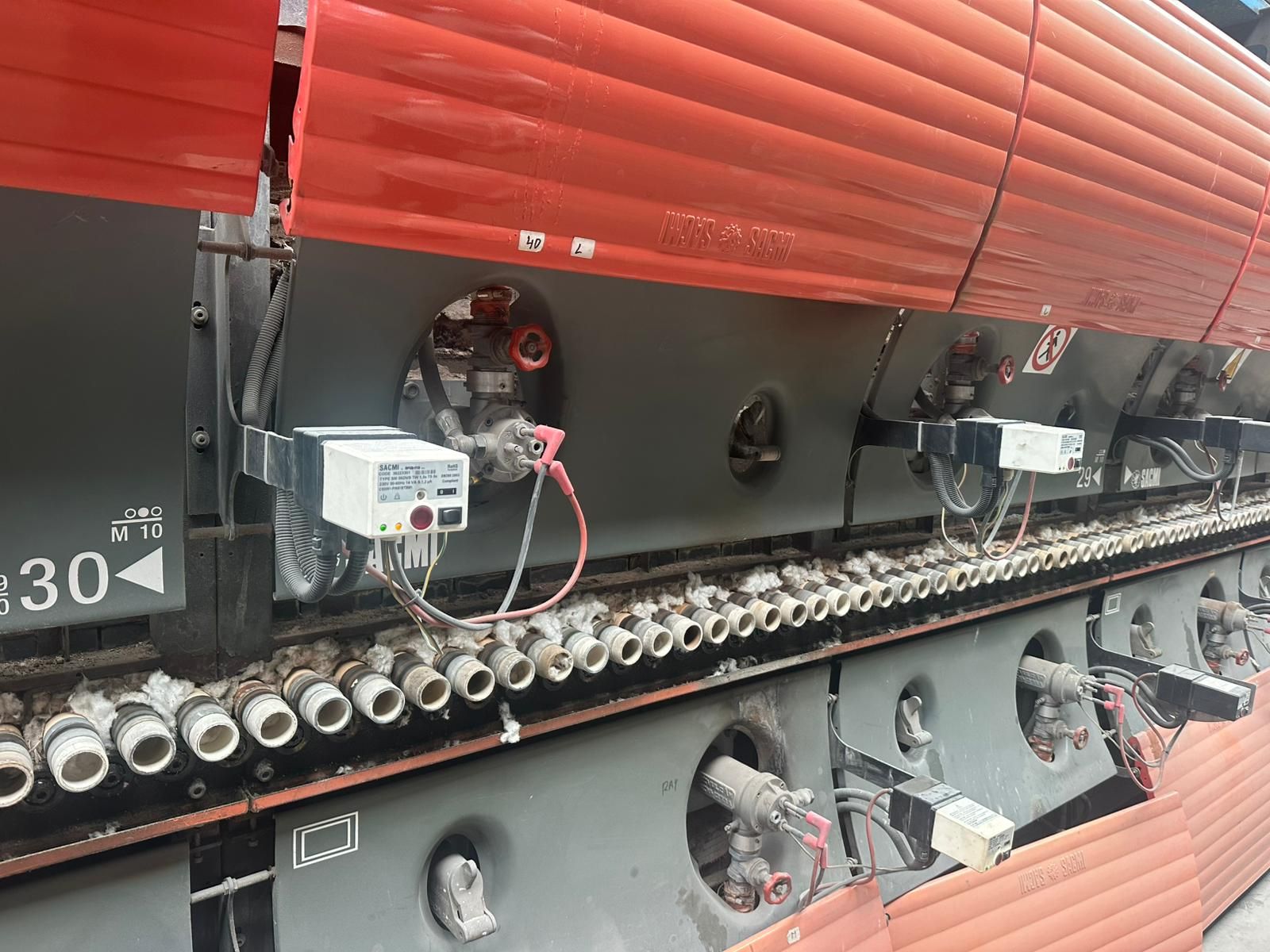
A single 100 kW EnergiCell delivers 1,200°C hot air straight into the furnace, replacing the natural gas burner at the heart of the process. The line’s kilns run 24/7 and require 3MW of continuous heat, which the EnergiCell can scale to meet without interruption. Take the methane out and the growing EUA carbon-allowance cost attached to burning it goes with it. On early modelling, the EnergiCell delivers that heat at an estimated net cost of around €15/MWh.
This is the point that matters most. The constraint on decarbonising industrial heat has never really been ambition; it has been cost and temperature. By delivering process heat at furnace temperatures and at a cost less than methane, the EnergiCell removes that constraint, and a whole category of ‘hard to abate’ processes become reachable.
The scale around us
Aveiro sits at the centre of Portugal’s ceramics industry, and the numbers are substantial. Portuguese ceramics carries over 300 MW of installed heating capacity and accounts for roughly half a million tonnes of CO₂ a year, much of it concentrated in the region where we are based.
Step back to the national picture and the opportunity widens. Gas-fired industrial heat across Portugal runs to roughly 1.7 GW, a market worth circa €2 billion per annum. Because temperature is no longer the limiting factor, the same technology that repowers a ceramics kiln can repower a boiler, a dryer or a furnace in glass, food, paper and beyond.
The cost case
Decarbonisation only scales when it pays. Gas heat today lands at over €60 per MWh of useful heat once the carbon allowance is added and efficiency losses are accounted for. ENG8 targets a generating cost of around €30 per MWh, falling toward €15 per MWh once the 100 kW direct electrical generator reaches production in 2028. On that basis we are currently offering industrial clients a 20% reduction in their total heating costs. These figures are based on early cost modelling and will be reviewed and refined as the technology moves through production development. The saving is real, it is recurring, and it is largely insulated from the gas-price and carbon-cost inflation that makes long-term energy budgeting so difficult for heavy industry.
Put to work on a single 3 MW ceramics line running 8,000 hours a year, that translates to around €294,000 saved annually, close to €2.9 million over a ten-year contract, and roughly 5,600 tonnes of CO₂ avoided each year. Multiply that across a regional cluster and the impact on both cost and emissions becomes significant.
More than heat
The EnergiCell does more than fire the kiln. This site already runs solar, but panels only generate whilst the sun is up. When they aren’t, the plant still needs firm, uninterrupted electricity, and EnergiCell generating systems can supply that requirement at a lower cost than battery storage. The result is a site that keeps firing day or night, drawing far less on the grid and far less on imported fuel.
Closing the loop
Run as a closed circuit, the EnergiCell lifts heating efficiency from around 80% to 95% and above. In a process that consumes energy every hour of every day, a step change of that size compounds quickly: less energy lost to waste heat, and far more delivered to the work the furnace is actually there to do.
Part of something larger
This work forms part of a STEP innovation funding programme, carried out alongside industrial and technical partners working to decarbonise some of the most demanding processes in manufacturing. The ceramics trial is the first proving ground, and the lessons from it feed directly into the wider rollout.
Heavy industry has long been labelled ‘hard to abate’. We think the next few years will tell a different story, and it begins on a factory floor in Portugal.