
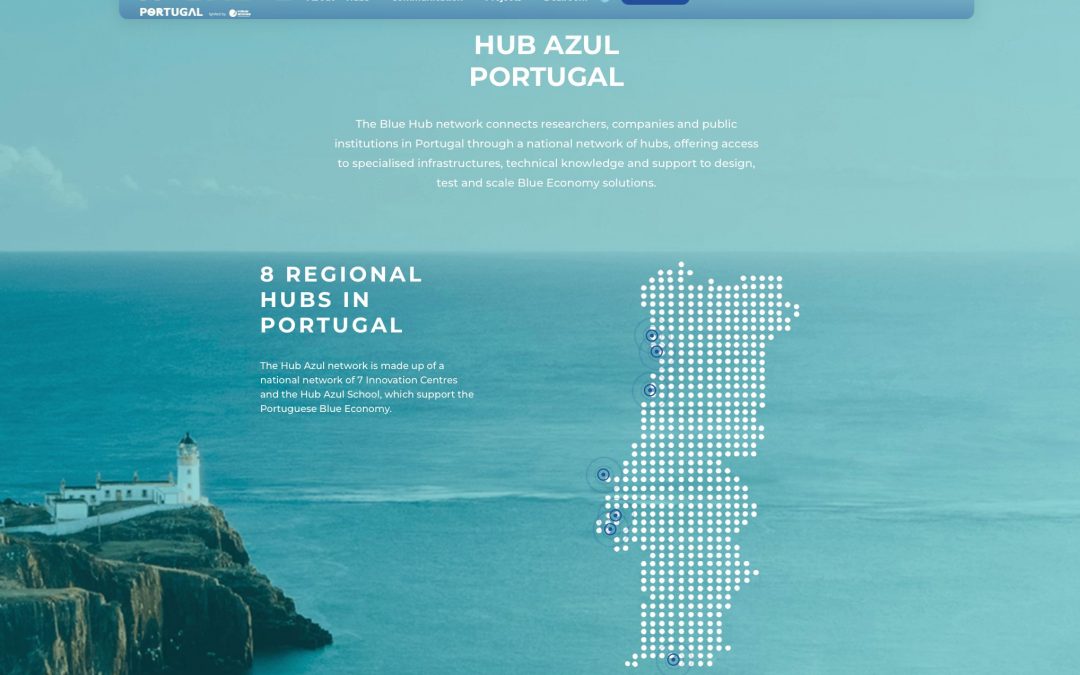
Earlier this month ENG8 was invited by Prio to present at Global Oeiras Ocean Days, a two-day conference dedicated to Portugal’s blue economy, held near Lisbon and organised by Hub Azul, the government-funded network set up to grow the country’s maritime economy. Prio is a leading Portuguese energy company that refines biodiesel and holds around a third of the national EV-charging market.
The blue economy faces a hard problem. EU and IMO emissions regulations are tightening, and the operators who keep ships moving and ports running are struggling to find low-emission power that is clean, affordable and reliable at the scale they need. For many, the cost of meeting those rules is becoming a serious threat rather than a manageable transition. Without practical options, regulation designed to protect the ocean risks holding back the very sector that depends on it.
Repower the Blue Economy
We presented a set of solutions under the banner ‘Repower the Blue Economy’, each built on the EnergiCell® and aimed at a different point where clean power is hardest to find:
- Onboard generation for a vessel’s primary and auxiliary power, providing clean energy at sea without reliance on conventional marine fuels.
- Shore-side power for ships while berthed, so they can shut down their engines in port and draw clean power instead, cutting emissions exactly where they affect coastal communities most.
- Power for the ports themselves, supplying the quaysides, terminals and operations that keep a working port running.
What ties the three together is the EnergiCell’s character: firm power generated on-site, around the clock, in modular units, without the emissions of combustion or the constraints of a grid connection that ports and vessels often cannot rely on.
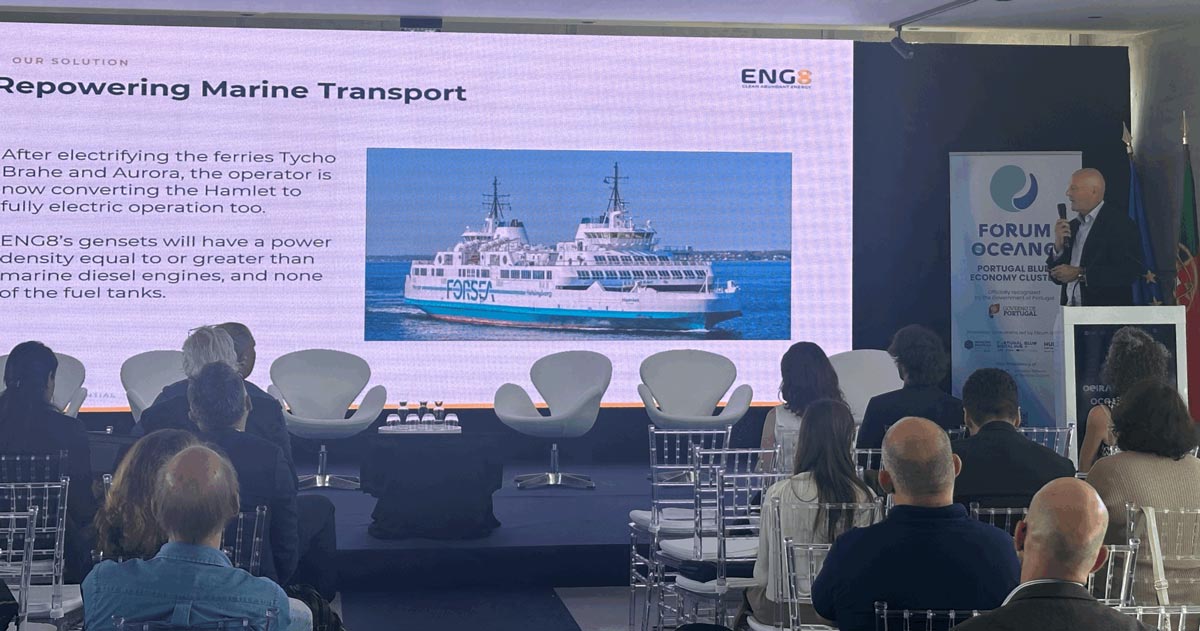
A constructive outcome
The response to the presentation was encouraging. Hub Azul will be looking actively at ways to enable ENG8 to bring its solutions into the maritime sector, a vital part of the Portuguese economy and one under real pressure to decarbonise. For a technology built to deliver clean, dependable power wherever it is needed, few sectors are a better fit than one that has to generate and use energy far from the grid.
This is an early step, and the work of turning interest into deployment lies ahead. But the conversation it opened, with a government-backed body whose purpose is to grow exactly this part of the economy, is a valuable one to be having.