Two days ago we shared our plans to work with a major Portuguese ceramics factory, to see how the EnergiCell® technology can significantly improve the efficiency and lower the energy cost of their production. Later that same week, our Co-founder and BDO Haslen Back also visited a leading Portuguese fuel and EV-charging company that is mentoring ENG8 to identify where the EnergiCell could integrate across their operations.
Fuel retailers are quietly turning into energy companies. The forecourt that sold only petrol and diesel a decade ago now offers charging points, gas and biofuels, and the businesses behind them are rethinking where their energy comes from. The applications below are still being assessed, but together they show how a single technology could serve heat, static power and transport from one platform.
It could start with heat
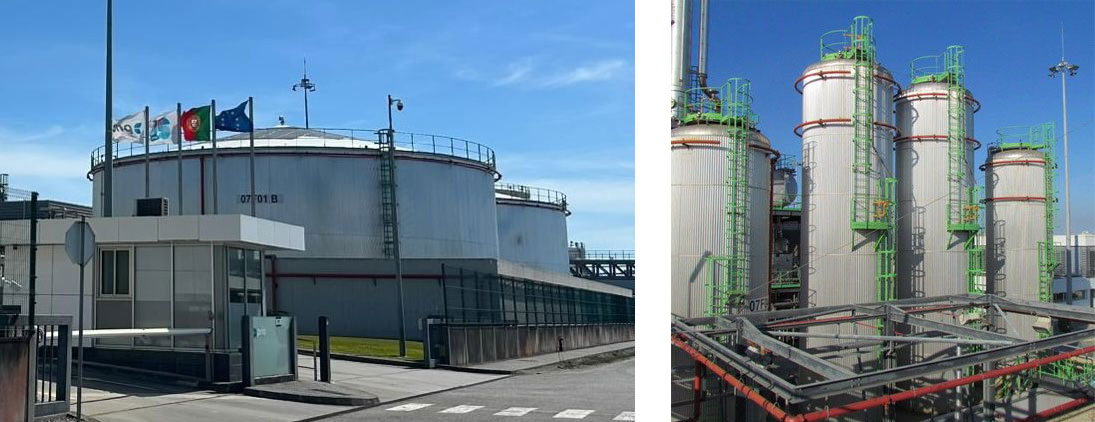
The most direct opportunity is heat, the same application at the centre of the ceramics trial. The company operates a gas-fired boiler rated at 8 MW, and one potential first application would replace the natural gas with clean process heat from the EnergiCell, as planned for the ceramics furnace. Take the methane out and the EUA carbon-allowance cost attached to burning it goes too. It is the same principle and the same hardware, applied to a different process: deliver the heat a process actually needs, at a lower cost, without the fuel and the carbon liability that come with combustion.
Heat is where the EnergiCell is most mature, and it is the natural place to start with any industrial partner. With an energy and mobility company, though, the conversation need not stop at the boiler.
From the factory to the forecourt
A national fuel network reaches across the whole country, from filling stations and convenience stores to a growing estate of EV charging points. Each of those sites needs power, and grid capacity is increasingly the constraint on how fast clean mobility can be rolled out. This is where the EnergiCell matters: it will be able to generate and deliver firm power on-site, around the clock, in modular 100 kW units that can be sited where the grid cannot easily reach.
Several possibilities came out of the visit, each still being assessed:
- Gensets for fuel stations, supplying clean, firm electricity to the forecourt and its services without waiting on a grid connection.
- Static EV charging, placing reliable charging capacity where demand is rising but grid headroom is tight.
- On-board EnergiCell power for electric trucks, extending range and reducing the charging downtime that holds back heavy-vehicle electrification.
- Genset distribution to customers across Portugal, using an established national network as a potential route to market for clean, decentralised generation.
That last point is worth dwelling on. A technology is only as useful as its reach, and an energy company with a national footprint and an existing customer base would be a natural channel for getting clean generation into the field at scale.
Why the EnergiCell could fit
The thread running through every one of these ideas is the same: firm power, generated on-site, independent of the grid, and packaged in modules small enough to sit behind a forecourt, inside a depot or on board a vehicle. For a business building out cleaner heat and cleaner mobility in parallel, that flexibility is the point. One technology, deployed in different form factors, could address heat, static power and transport from a single platform. We are already going through the selection process to join the company’s accelerator programme. If successful, it would give us a framework to deliver these applications over time.
Part of a wider programme
This sits alongside our STEP innovation funding programme and the ceramics trial we wrote about two days ago, as we move the EnergiCell from process heat into transport and distribution. The ceramics trial will test the heat application in one of industry’s most demanding settings; this visit takes the same technology and asks where else it could go. Each engagement teaches us something about a new use case, and this one opens up the mobility and distribution side of the map in a way our industrial work could not.